What Is ECA? Why Activities Outside Class Matter More Than You Might Think
What Is ECA? Why Activities Outside Class Matter More Than You Might Think
Many parents have come across the term ECA in a school notice or a parents' group chat, without being sure what it means, how it differs from tutoring, or how important it really is for their child.
This article explains the basics, so you can decide whether this kind of activity suits your child and how to choose well.
What is ECA?
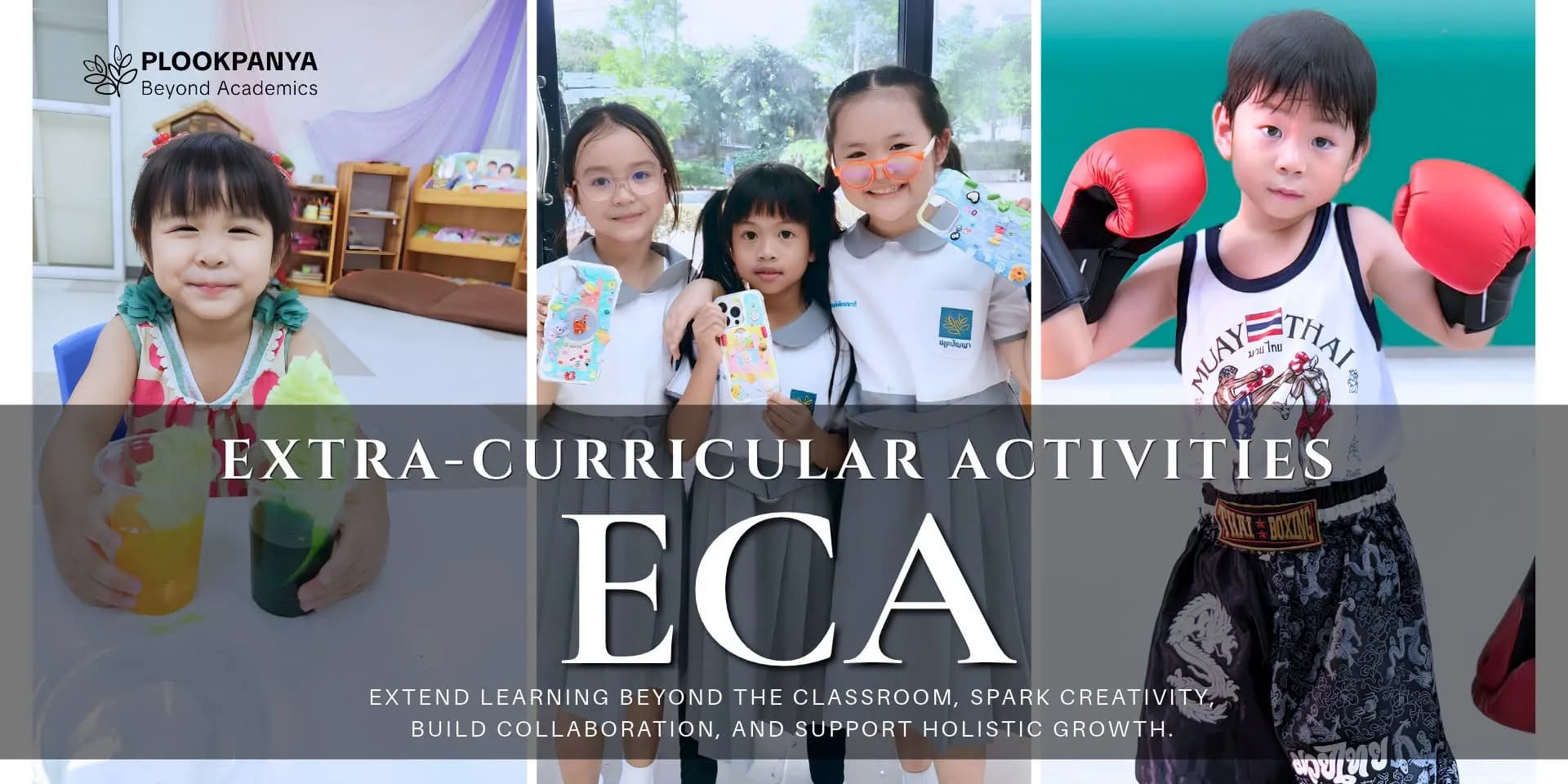
ECA stands for Extra-Curricular Activities: activities that take place outside regular subjects and the regular timetable. What matters most is that the child chooses based on their own interests, whether that is music, art, sport, science, languages or technology.
Many families think of tutoring or cram classes, but the purpose is different. Tutoring usually helps a child keep up with lessons or do better in exams. ECA is about giving children the chance to try what interests them, practise steadily, and enjoy learning without worrying about grades.
Why does ECA matter?
1. Children discover what they enjoy and are good at
In regular classes, children meet the subjects the curriculum sets. Some may never have tried football, clay, guitar or coding. ECA lets them try many things in a low-pressure setting until they find what fits.
2. They practise skills the classroom finds hard to teach
Teamwork, patience with repeated practice, listening to peers and managing time are skills built by doing, more than by reading or memorising.
3. They dare to try, to fail, and to learn from mistakes
Because ECA is not an exam, children are more willing to try things they are not yet good at, and learn that not getting it right the first time is normal. The confidence this builds often carries over into other subjects.
4. They meet friends who share their interests
Children get to know peers from other classes, other age groups, and sometimes other schools, with a shared interest as common ground. This makes friendships and communication skills easier to build.
5. It brings balance to school life
Children who have time for what they love, who move their bodies or use their creativity, often manage school stress better.
How does ECA connect with Plookpanya's approach?
Plookpanya School is developing PPY Alpha. It is not a new curriculum. It is an upgrade to how learning works, moving from memorisation toward the skills children need in the age of AI. It sits within the Plookpanya Beyond Academic idea, which has 4 pillars: Global Readiness, Critical Thinking, Life Skills and Self-Discovery.
ECA is one place where children practise these skills through what they are interested in. For example:
- Global Readiness: language activities such as English and Chinese
- Critical Thinking: science, robotics, coding and brain games
- Life Skills: sport and group activities that build discipline and teamwork
- Self-Discovery: music, art, dance and performance
One activity can build several of these at once, depending on the child and how they learn.
How to choose ECA for your child
- Start from your child's interests, not parents' expectations. Ask what they would like to try, or notice what they do with free time.
- Start small. One activity per term is enough. Children still need time to rest and play freely.
- Try it for one term first. Interests change. Finding out something is not for them is a worthwhile result.
- Watch your child's happiness. If they look forward to the session, you are on the right track.
- Check the schedule. Younger children tire easily, so pick days and times that do not clash with their main rest periods.
ECA at Plookpanya School
In term 2/2569, the school offers more than 110 activities across 10 categories: music, art and crafts, dance and performance, sport and health, martial arts, science and STEM, robotics and coding, digital and AI, languages, and maths and brain games.
Activities are available from pre-kindergarten, Kindergarten 1–3 and Primary 1–6 through to Secondary 1–6, and each activity lists the grade levels it suits.
ECA is open to both Plookpanya students and students from other schools. Parents submit the application.
Activities and fees may change each term, so please check the latest details on the application page.
How to apply, in brief: choose your child's grade level, add activities to the timetable, submit the application, then transfer payment and attach the slip within 120 minutes of submitting, or the seat is released automatically. The office then verifies the slip and sends a confirmation email. You can check your status on the status page.
For new families: the Discovery Pass
New families who enrol at Plookpanya School receive the Discovery Pass: the chance to choose ECA and Camps free throughout academic year 2570, worth over 30,000 baht, so children can try a wide range of activities and discover their own interests.
If you would like to see the school in person before deciding, you can book a school visit.
Final thoughts
ECA is not meant to fill your child's timetable. It is a space for children to try what interests them freely. Sometimes a small interest that starts with one term of one activity grows into a skill, or a path the child chooses to follow.
Contact Plookpanya School
Phone: 044-927-111
LINE Official: @plookpanya
Email: info@plookpanya.ac.th
Photos


