Bilingual School, International Programme or International School: How Korat Parents Can Choose
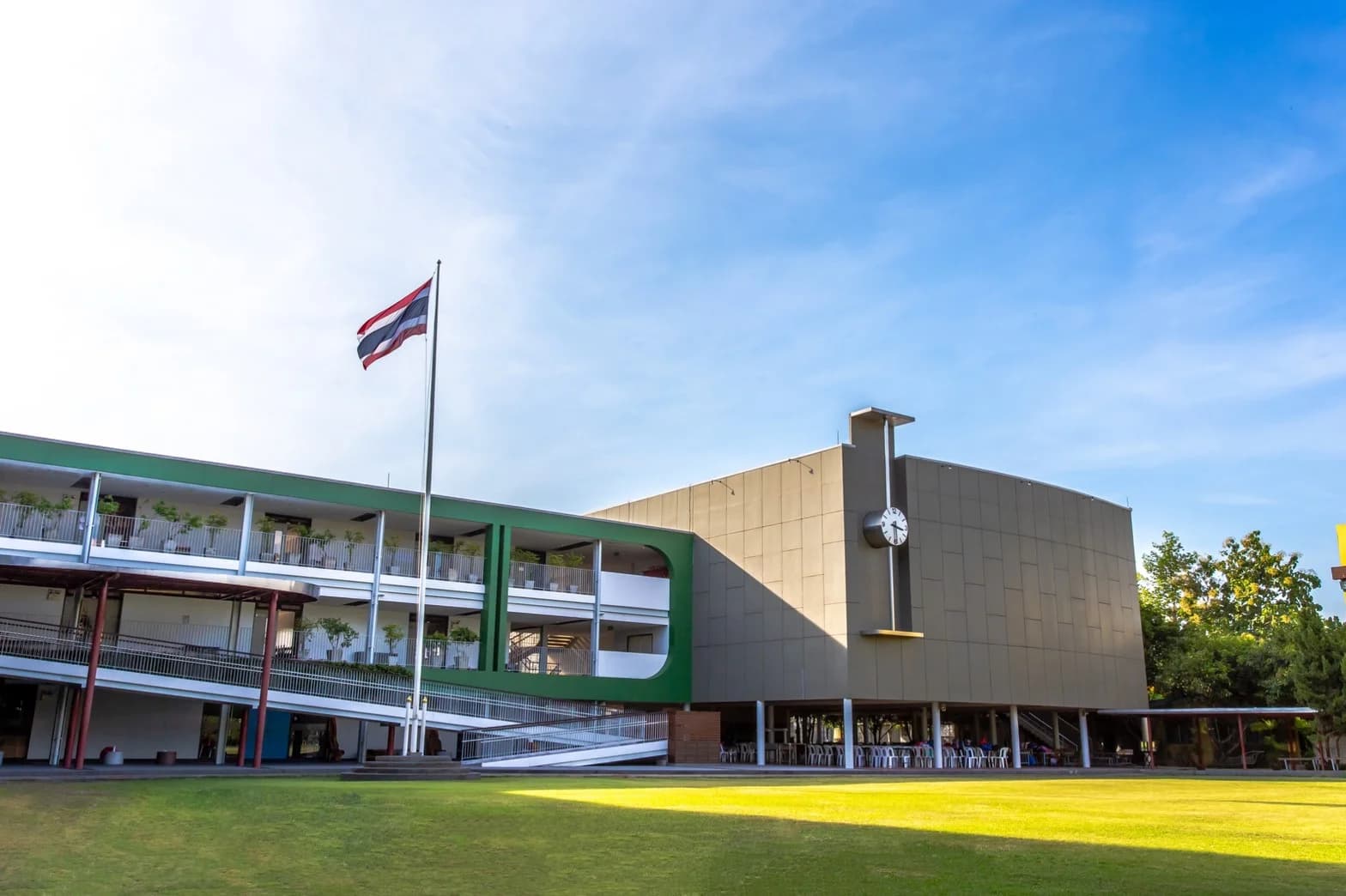
Bilingual School, International Programme or International School: How Korat Parents Can Choose
If you want your child to become confident in English while maintaining a strong foundation in Thai, which type of school should you choose?
For families in Nakhon Ratchasima (Korat), the options can include bilingual schools, International Programmes (IP), and international schools. These terms may sound similar, but they do not necessarily describe the same educational experience.
The differences often involve the curriculum, language of instruction, classroom environment, and potential pathways to university.
This guide is written by Plookpanya School, a Thai bilingual private school in Korat, to help parents understand these options and make informed decisions based on their child's needs.
1. What Is the Difference Between the Three Options?
The main differences concern the curriculum and the role of English in everyday learning. An International Programme can operate within a bilingual school; it does not automatically make that institution an international school.
| Feature | Bilingual School (IEP / EP) | International Programme (IP) within a Bilingual School | International School |
|---|---|---|---|
| Core curriculum | Thai national curriculum with enhanced English | International curriculum, such as Cambridge, alongside the Thai curriculum | Generally follows an international curriculum |
| Language of instruction | Thai and English, with varying proportions | Primarily English in many subjects | Generally English or another foreign language |
| Thai curriculum | Core component | Can be taught alongside the international curriculum | Varies by school |
| Main focus | Thai educational foundation and English development | Combination of Thai and international learning | Education primarily within an international curriculum |
| May suit families seeking | A Thai educational foundation with stronger English | Strong English immersion with both Thai and international learning | A predominantly international educational pathway |
These descriptions are general. Schools can differ considerably, even when they use similar programme names. Parents should always check the curriculum, subjects taught in English, qualifications available, and classroom environment before making a decision.
Book a school visit at Plookpanya
2. What Is a Bilingual School?
A bilingual school uses Thai and English in its educational programme, while maintaining the Thai national curriculum as an essential foundation.
The amount of English used can vary significantly between schools. Some teach selected subjects in English, while others offer more intensive language learning throughout the school day.
For parents, the important question is not simply whether a school describes itself as bilingual, but how students actually use English in everyday learning.
Plookpanya's Intensive English Programme (IEP)
Plookpanya offers an Intensive English Programme based on the Thai national core curriculum with enhanced English instruction. The programme is available from Pre-Nursery through Mathayom 6 (Grade 12).
It is designed for families who value a strong Thai educational foundation while also wanting their children to develop English-language skills throughout their school years.
Parents interested in the broader benefits of bilingual education can read our guide to bilingual learning.
3. How Is an International Programme Different from an International School?
An International Programme is a curriculum offered within a school. An international school is a type of educational institution.
This distinction is particularly important when comparing schools in Thailand.
A bilingual school may offer an International Programme that incorporates a foreign curriculum while maintaining elements of the Thai curriculum. An international school, by comparison, generally operates primarily under an international curriculum. Its qualifications, language environment, and curriculum structure depend on the institution.
The presence of a Cambridge curriculum or a high percentage of English instruction does not, by itself, mean that a school is classified as an international school.
Plookpanya's International Programme
Plookpanya is a Thai bilingual private school under Thailand's Office of the Basic Education Commission (OBEC). It is not an international school.
The school offers two educational pathways: the Intensive English Programme (IEP) and the International Programme (IP).
Plookpanya's IP incorporates Cambridge education alongside the Thai national core curriculum. Key characteristics include:
- 80–90% of instruction in English, giving students extensive opportunities to learn academic subjects through English.
- An average of approximately 11–12 students per IP class, based on 172 students across 15 classes. Individual class sizes vary by grade.
- Registered Cambridge School status, with optional Cambridge IGCSE and A Level examinations.
- Availability from Kindergarten 1 through Mathayom 6, with new students accepted at every grade level.
Cambridge IGCSE and A Level examinations are optional rather than compulsory for all IP students. Whether to take them depends on individual educational goals.
This combination provides an option for families who want substantial English-medium learning while retaining a connection to Thailand's national curriculum.
Explore Plookpanya's academic programmes
4. Six Things Parents Should Compare Before Choosing a School
Choosing a school involves more than comparing programme names. Families should consider the actual learning experience and how well it fits their child's interests, abilities, and long-term goals.
4.1 Curriculum and Qualifications
Start by asking which curriculum the school follows. Does it use the Thai national curriculum, an international curriculum, or a combination of both? What subjects are taught under each system?
Parents should also ask about examinations and qualifications, including whether assessments such as IGCSE and A Level are compulsory or optional.
At Plookpanya, students in the IP may choose to take Cambridge IGCSE and A Level examinations according to their educational plans.
4.2 Actual English Exposure
A school's programme name does not tell you exactly how much English students use.
Ask which subjects are taught in English, how frequently students communicate in English, and whether they regularly use the language to discuss ideas, solve problems, and work together.
Plookpanya's IP uses English for approximately 80–90% of instruction. The IEP follows the Thai core curriculum with intensive English learning.
4.3 Class Size and Teacher Support
Class size is an important consideration when choosing a school, as it can influence opportunities for classroom participation, teacher feedback, and individual learning support.
At Plookpanya, average class sizes differ between the two programmes:
- Intensive English Programme (IEP): Approximately 18 students per class
- International Programme (IP): Approximately 11 students per class
Actual class sizes vary by grade level. Parents are encouraged to ask about the specific class size for their child's intended year group when visiting the school.
4.4 Maintaining Thai-Language Skills
For families living in Thailand or planning to remain connected to the Thai education system, Thai-language development remains important.
Even when English is the principal language of instruction, parents should understand how reading, writing, and communication in Thai are supported.
A useful question is how the school helps children develop both languages without assuming that progress in one must come at the expense of the other.
4.5 Total Annual Education Costs
Tuition fees are only part of the financial comparison.
Families should request a clear breakdown of annual education costs, including applicable entrance fees, learning materials, activities, and other expenses.
Comparing the total costs on a consistent basis provides a clearer picture than looking at headline tuition figures alone.
For current information about Plookpanya, visit the 2027 academic year tuition page.
4.6 Future University Pathways
Parents should consider how each curriculum supports possible university applications in Thailand or abroad.
Ask about the school's guidance services, examination requirements, and the educational routes available after graduation.
It is not always necessary for younger students to have a fixed university destination. However, understanding the available pathways helps families make more informed decisions as their children's interests develop.
5. Which Programme Is Right for Your Child?
There is no single programme that is ideal for every student. The most appropriate choice depends on the child's educational background, language confidence, interests, and the family's expectations.
Consider IEP if...
Your family values the Thai national curriculum and wants your child to develop English proficiency through an enhanced English-learning environment.
An IEP can be particularly relevant for families seeking continuity within the Thai education system while providing stronger language-development opportunities.
Consider IP if...
Your family wants English to play a major role in everyday academic learning, alongside opportunities to study within both Thai and international curriculum frameworks.
An IP may appeal to families considering a range of future educational pathways, although the details and qualifications vary by school.
Consider an international school if...
Your family specifically wants an educational experience based primarily on an international curriculum.
As international schools differ in their curricula and qualifications, families should examine the specific programme rather than making assumptions based on the school's designation.
The best choice is the one that supports your child's learning and development, rather than simply the option with the most international-sounding name.
Explore Plookpanya's academic programmes or view tuition information.
6. Questions to Ask When Visiting a School
A school visit can provide insights that websites and brochures cannot fully communicate.
Before visiting, consider preparing these questions:
- Which curriculum forms the foundation of the programme?
- What proportion of classroom instruction takes place in English?
- How many students and teachers are normally in each class?
- How does the school support students who are still developing their English confidence?
- How is individual learning progress assessed and communicated to parents?
- What opportunities exist for sports, arts, technology, and other interests beyond academic subjects?
- What is the total expected annual cost of attendance?
- How does the programme support future educational options in Thailand and overseas?
Whenever possible, observe the classroom environment, speak with teachers, and consider how your child might respond to the teaching approach.
You can also consult Plookpanya's school visit preparation guide.
7. Explore Your Options at Plookpanya School
Plookpanya School is a Thai bilingual private school in Nakhon Ratchasima offering education from Pre-Nursery to Mathayom 6.
Its two programmes, Intensive English Programme (IEP) and International Programme (IP), provide different approaches to English-language learning and academic development.
Families considering enrollment for the 2027 academic year can explore the following resources:
- Admissions information and age requirements
- Tuition and fees
- Academic programmes
- Book a school visit
- Scholarship opportunities
Scholarships for students entering Mathayom 1 and Mathayom 4 are available across both programmes, with an application deadline of 20 December 2026.
Contact Plookpanya School
Phone: 044-927-111
LINE: @plookpanya
Email: info@plookpanya.ac.th
Office hours: Monday–Saturday, 8:00 AM–4:30 PM

